Showing posts with label bluesbreakers. Show all posts

Saturday, 17 October 2020

Why I Suck... Progress Report #9! Eric Clapton (Bluesbreakers era)

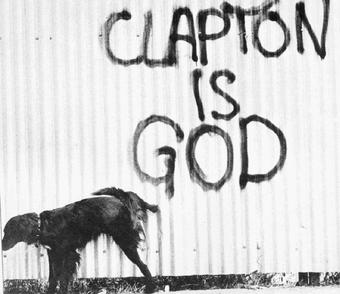
 This month, we welcome God himself into the humble pages of this blog. That is, God in the shape of Eric Clapton in his early career – specifically the legendary “Beano” album recorded with John Mayall's Bluesbreakers.

And you're going to have to forgive me for feelig just the tiniest bit smug, as I set myself the goal of transcribing all the solos off this one through September – and managed it! So that's this and “Live At The Regal” done – 2020 is proving to suck for pretty much everyone, but I will definitely be finishing this year a far better player than I started it as. I would absolutely recommend setting aside a portion of your practice time to work on transcription, almost regardless of ability level, as improving your ear is so crucial to developing every aspect of musicianship.


Anyway, enough digression – let's look at EC himself. As he's so deeply ingrained into the mainstream musical “establishment” now, it's hard to picture Clapton as a rock & roll outsider, but in the early 1960's that is exactly what he was. He began his guitar journey with something that we can all identify with - being given a cheap guitar by a kindly but uninformed relative, discovering that cheap = badly made & VERY difficult to play (at least it did before Yamaha brought out the Pacifica 112 in the 90s), and putting it down feeling like it's an impossibility. This false start – very similar to what I had myself at that age – would be remedied a couple of years later and Clapton began playing in earnest age 15, now motivated by a deep seated love of the blues music coming out of America. He would practice long hours, poring over licks and solos to get each one just so, often recording himself on a reel to reel tape recorder to check his progress.


In 1961 the now 16 year old Clapton enrolled in Kingston Art College but his focus remained on music and he took to busking around the area, starting to play more with other musicians and local bands before finding his first high profile gig with The Yardbirds in October of 1963. They were primarily focused on blues and rock & roll, but in March of 1965 had a breakthrough pop single with “For Your Love” which took them in a completely different directoion, and not one Clapton was happy with. He left, and joined John Mayall's Bluesbreakers in April of 1965 recording the famous “Beano” album with them. This is a semi-legendary album in guitar circles because at the time it really wasn't like anything that had been done before. Distortion, for example, was not something considered desirable by amp manufacturers so Clapton would push his Les Paul and Marshall to absolutely ear splitting volumes in order to get the thick, sustaining sound heard on tracks like “Steppin' Out” and his famous cover of “Hideaway”. His pentatonic pyrotechnics were also a world away from the sounds of someone like Hank Marvin or the Beatles which were most people's reference points for what a guitar should sound like, and what guitar playing was at that point.


Clapton would leave the band briefly in 1965 before rejoining, and then leaving again (admitting himself in later years to have been more than a little “flaky”) in July of 1966, ironically enough before the album itself had been released. He would go on to form Cream, another blues rock powerhouse and important link in the chain, but that's a story for another time – we're looking at EC's Bluesbreaker plaing this month.


I've lost count of the number of times I've written this now, but the basis of his style is the combination of minor and major pentatonics – as it has been with everyone we're looking at, we're looking much more at the “how” than the “what”. Let's start with the iconic opener to the album – the cover of the Otis Rush song “All Your Love”.


This opening “rip” up the fretboard was in itself a pretty bold statement, as it's immediately distinctive and not something most listeners would have heard before, especially performed with such volume and ferocity.


Clapton was also fond of repicking bent notes, something seen in his “Little Girl” solo where his rhythms double up what the basis is playing, crafting the solo into the fabric of the song rather than being a “here's twelve bars for you, go nuts” approach.


And I couldn't finish this without showing a couple of examples of his masterful blending of major and minor pentatonics:


We'll return to EC next year looking at his Cream – era playing, as he's such an influential player, but next month we're back across the Atlantic to check out Mike Bloomfield – till then, stay safe, stay sane, play they blues HARD!


Thursday, 10 September 2020

Why I Suck.... Progress Report #8 - Peter Green

 So, yes, I've gone out of sequence here, Peter Green wasn't supposed to be my object of study until October – but Nature has no respect for our plans and selfishly took this brilliant if troubled musician from us on July 25th, so swapping him to August and really delving into his style seemed an appropriate way of paying my respects to one of the truly great blues players.

Born Peter Allen Greenbaum on October 29th 1946 in London's Bethnal Green as the youngest of four children, it was Peter's brother Michael who first got him started, teaching him his first few chords. But by 11 he'd caught the bug seriously and begun teaching himself, heavily influenced (as many of his generation were) by The Shadow's Hank Marvin. By 15 he was playing professionally, playing bass and lead guitar in a variety of covers and rhythm and blues based bands. When John Mayall's Bluesbreakers exploded onto the scene with Eric Clapton after recording the now legendary “Beano” album in 1965, Green (having dropped the “baum” from his surname after being teased about it at school) was inspired to focus heavily on lead guitar and was a frequent attendee at their gigs during the “Clapton Is God” era of 1965-66.

It was Clapton's self-admitted unreliability and flakiness – leaving mid-tour to take a holiday in Greece – that would lead to Green's breakthrough. John Mayall recounts that during the Bluesbreaker's gigs with a variety of dep guitarists, Green would frequently be in the audience. “Peter had pestered John to employ him,” remembers Clapton, “often turning up at gigs and shouting from the audience that he was much better than whoever was playing that night. “

Soon enough, he would get his chance to prove it. After four concerts with the Bluesbreaker's as a dep, Green was hired as a full time band member and recorded “ A Hard Road” including self-penned instrumental “The Supernatural”, famous for it's eerie shimmer and sustain, as well as a blistering cover of Freddie King's “The Stumble” - which I spent most of August transcribing and will form the basis for this month's licks.

During his tenure with the Bluesbreaker's, Green met drummer Mick Fleetwood and bassist John McVie, and in 1967 they left the Bluesbreakers to form Fleetwood Mac with additional guitarists Jeremy Spencer and Danny Kirwan. Early Fleetwood Mac brought success with blues influenced tracks like “Oh Well”, “Green Manalishi”, “Man Of The World” and the instrumental “Albatross” which incredibly remains Fleetwood Mac's only number one single!

Unfortunately this period also brought Green into contact with LSD which he began taking in increasing quantities. This, combined with a diagnosis of schizophrenia, led to his quitting Fleetwood Mac and music in general for an extended period. The details of this are widely available, so I'm going to switch to a personal perspective here as his re-emergence in the mid 90s coincided with me getting serious about guitar playing, and my dad playing me the famous intro solo to the Fleetwood Mac with the encouragement to “learn that”! Which I duly did, with the aid of an early copy of Guitar Techniques magazine running a feature on him in early 1996 with transcriptions of both that and “Albatross”.

Fast forward a couple of years to 1999, and I was at Leeds University in my second year, and a regular at the open mic down the road from the university itself. I struck up a friendship with Jet Martin who ran it and was a solo blues artist, and one evening he mentioned to me that Peter Green (now with the Splinter Group, a blues project he formed in the 90s as part of his rehabilitation) was playing at the nearby Irish Centre, and as he shared management he was going to be the support – and would I like to be on the guest list?

Having never been on the guest list for anything, unsurprisingly my answer was yes, and not only did I get to see Peter Green himself from about 6 feet away, but also to meet him! However it was clear that his recovery at that point was far from 100%, he was very distant – not unpleasant, perfectly polite...just carrying on a completely separate conversation from the one I was trying to have with him- still, I have his autograph!

Right, enough history, let's get to analysing his playing style.

It will come as absolutely no surprise to both of you who've been following this blog that the major and minor pentatonics formed the basis of Green's style, and he had a beautiful knack of blending the two (for example, the cover of “Need Your Love So Bad”). His approach blended position 3 of A minor pentatonic with position 4 of A major:


And here's a typical Green style lick blending these two:


Now, Peter Green is rightly revered as a beautiful “feel” player with exquisite taste, touch and tone. But he could also put pedal to metal when he wanted to, and on his cover of Freddie King's “The Stumble” he does exactly that, pulling out this absolutely blistering triplet based E minor pentatonic run: https://youtu.be/NLpziHTO-Nc?t=70


Check out the ingenious way the phrasing seems to double back on itself, as well as the dash of b5 from the blues scale to top things off. Not to mention the sheer size of the thing – over four bars long! In terms of the mental agility required to pull off something like that it's akin to running the 100m sprint but on a tightrope strung across Niagra Falls – hugely impressive.


Have fun with these and see you next month for God himself, the John Mayall- era Eric Clapton!