Saturday, 2 January 2021

2021 - New Year, New Practice Plan!

 Well, 2020 sucked, plain and simple. I count myself fortunate that I've not lost anyone to COVID or had it myself, and that I've managed to keep operating during the lockdowns, but it's still been pretty miserable. And I'm well aware that there are many, many people out there who've been far worse affected. However, for me personally, there was one resounding success story – my attempt to rejig my practice routine, so rather than studying exotic scales and arpeggios which I would never end up actually using, I used my ractice time to study and transcribe some of the great blues players out there and improve my feel. I finally got down to “paying my dues” picking out licks from the greats by ear and it has been enormously helpful and enormously enjoyable. I managed to do the entirety of Clapton's Bluesbreakers “Beano” album, B.B. King's “Live At The Regal”, and a fair old chunk of SRV's “Texas Flood” and a whole host of other stuff, by Hendrix, Mike Bloomfield, Albert and Freddie King etc.

So, I'm carrying on with the plan! Some folks are getting revisited, as you'll see, and some new non-blues names have been added to the list, for no other reason than I like them! Some of these players also have the advantage of being alive, and active on social media, so I'll be reaching out to try and interview them. Whether or not they get back to me.. well, we'll see!

Without further ado then, here's the plan for 2021:

January – Neil Zaza

February – Albert King Pt. II

March – Sophie Lloyd

April – Freddie King Pt. II

May – Pete Honore

June – B B King Pt. II

July – Jeff Beck

August – Eric Clapton Pt. II (Cream)

September – Jimmy Page

October – Hendrix Pt. II

November – Joe Bonamassa

December – Stevie Ray Vaughan Pt. II


As you can see, broadening the horizons, covering some big names and a few YouTube stars, so looking forward to seeing what I can learn from this year! What are your guitar ambitions for 2021? Whatever your level, there's always ways to improve, so good luck and stay safe out there!

Friday, 18 December 2020

Why I Suck.. Progress Report #11 - Jimi Hendrix!

 Oh yes, the day has come. 30 days of the man himself – the one, the only, the icon that is James Marshall Hendrix. I've been a fan of his ever since my early days of guitar playing, but I'd never actually sat down and tried to work out any of his stuff by ear myself, believing I needed to be dependent on tablatures... another instance of failing to see something that was right in front of me! I'm not going to belabour Jimi's life story as it's told in many other places in great depth and detail, but for those of you unfamiliar with his background I'll give a quick synopsis before we get into the nice juicy licks...


Born Johnny Allen Hendrix on November 27 1942 in Seattle, Washington to parents Al and Lucille (and the first of five children, all who would end up being given up for adoption or foster care), his upbringing was a tempestuous one as Al struggled to find steady work after being honourably discharged from the US Army on September 1 1945. The family nounced from cheap apartment to cheap motel room, and both Al and Lucille took refuge in alcohol, leading to frequent fights between them. The young Jimi (having been renamed James Marshall Hendrix in 1946) was deeply affected by these experiences, often taking to hiding in closets. In 1951 they were divorced, with Al being granted custody of Jimi and Leon. In 1958, Lucille passed away from a ruptured spleen as the years of alcohol abuse caught up with her, having developed cirrhosis of the liver. Jimi (16 at this point) and Leon were not allowed to go to their mothers' funeral, their father instead buying them shots of whiskey and telling them that was how men dealt with loss.. So, not exactly an idyllic childhood. And understandably, young Jimi picked up a few quirks.

His habit of cradling a broom much as a child would hold a security blanket, in emulation of a guitar, caught the attention of his high school social worker who suggested that the lack of a guitar might actually be causing him psychological damage and requested schhol funding. This sady failed, and Al refused to buy him a guitar, but whilst helping his father with a house clearance in 1957, Jimi discovered a ukulele with one of the four strings still attached. He was allowed to keep the instrument, with it's single string, and began playing along by ear to rock and roll records, particularly “Hound Dog”. Finally, in 1958 he acquired a cheap acoustic guitar and that's when things got started in earnest. Hendrix would practice for hours along to records by the blues greats such as Muddy Waters, Howlin' Wolf and BB King. In fact one thing I remember thinking when I was tackling BB King was that at some point Jimi would have been doing what I was doing – studying the same songs, picking out the same notes by ear. There's an eerie thrill to be had there.

Anyway, back to the story! The first tune Hendrix learnt was Peter Gunn, and after his first gig with his first band the Velevtones it was obvious that he needed an electric guitar to be heard over the band. Al finally relented in 1959 and bought Jimi a white Supro Ozark guitar, and he had his first gig with a professional band – who promptly fired him for showing off! His next band was The Rocking Kings, who gigged regularly around Seattle. Sadly the Supro was stole one night at a gig and Al – now convinced of his son's ability and determination – replaced it with a red Danelectro.

However, it was not all plain sailing, as by age 19 Jimi had been caught riding in stolen cars and amassed enough of a criminal record to be faced with the choice between joining the army or prison. Hendrix chose the army, and must have impressed during his basic training as he wound up being assigned to the elite 101st Airborne. However, he didn't take to soldiering and was eventually given a general discharge. He didn't enjoy army life, but during this time he met and impressed bass player Billy Cox. In 1963, a year after Hendrix was discharged, Cox was discharged too and the pair moved to Tennessee to form the King Kasuals – this was where Hendrix picked up the trick of playing with his teeth. From there, they moved to Nashville in 1964 and Jimi began to take jobs as a sideman – backing James Brown, Little Richard and Ike & Tina Turner as well as the Isley Brother with whom he recorded the single “Testify”.

Hendrix soon found sideman work to be restrictive and unfulfilling, citing incidents with James Brown and Little Richard where band members would be fined for minor infractions like incorrect dress, errors in dance routines etc being essentially methods by which bandleaders would find excuses not to pay their members. He made the move to Greenwich Village in New York in 1966 and we all know the story from there – impressed Animals bass player Chas Chandler so much he brought Jimi to England, set him up with Noel Redding and Mitch Mitchell to form the Jimi Hendrix Experience, they released “Hey Joe” as a single and from there Jimi would go on to become a megastar guitar icon before his tragic death at the age of 27.

It's startling to reflect that Hendrix was a relative latecomer to the guitar, and even more humbling to realise he accomplished everything he did in just twelve years- from picking out melodies on a one string ukulele to practically inventing psychedelic rock with a burning Stratocaster, a cranked Marshall and a wah. Having been playing for, at the time of writing, 26 years myself, I can't help wondering a) where he found the time, and b) what the hell have I been doing all this time??


Well, after a pause for reflection, let's get into the nitty gritty of his playing. All the examples here are drawn from the “Blues” album, as with all the theatrics involved with Hendrix's performances, he was at heart a blues guitarist, and he played the blues beautifully, with a deftness and intricacy I don't think I quite realised until I began to transcribe his material.

The tools he used were pretty much the same as everyone else we've covered so far – minor and major pentatonics with a smattering of blues scale – although he would find his way to include elements of Dorian and Mixolydian tonalities in his more psychedelic exploits, and songs like “The Wind Cries Mary” showcased his ability to use chord fragments to construct solos.

To do justice to his playing in a thorough in depth analysis would mean this article not getting finished until sometime around 2025, so I'm going to purposely limit the scope here. We#re going to take a simple minor pentatonic phrase which crops up in many of his improvisations, and see how he develops it.

Here's the basic phrase:


Here's the first development of it (all these are taken from Red House, tabbed in Bb for convenience but probably played in B and detuned to Eb), starting to incorporate sequencing ideas:


This next one effectively takes the Magic Three Notes idea my students will be very familiar with and moves it up onto the E and B strings to create a blistering repetitive pattern


This final development takes you all the way down the scale, and includes an actually there bum note on the recording! Just goes to show that if Hendrix can make a mistake and laugh it off, improvising his way out of it, then surely we all can take some lessons from that – don't fear the so-called “wrong” note, just hold your nerve and keep going!


We'll return to Jimi again as there's SO much to be learnt from his playing, but as time is a factor we'll move on to the final act of 2020 – the Texas Tornado, Stevie Ray Vaughan himself!


Stay safe and sane out there, and may you all have the best Christmas and New Year's that COVID restrictions allow for....

Friday, 6 November 2020

Why I Suck... Progress Report #10! Mike Bloomfield

Another month, another lockdown announcement and oh look, the clocks have gone back so that's the sun going down at 4pm now... 2020 has provided no shortage of reasons to play the blues, so let's take a look at one of it's more overlooked exponents – Mike Bloomfield. Now I must confess to knowing the name but never really having listened to much of his playing, so this was a bit of a voyage of discovery for me. First, a little on the man himself.

Michael Bernard Bloomfield was born in Chicago to a wealthy Jewish family on July 28th of 1943. Growing up, he increasingly found himself rejecting the discipline of school and the expectations of a wealthy, respectable family and drawn to the raw, earthy blues scene developing in Chicago's South and West sides (where, as previous articles have noted, the likes of BB King were beginning to make their mark). He acquired a guitar from a pawnshop run by one if his grandfather's, and despite being left handed, trained himself to play right-handed. Spending time at the pawnshop brought the relatively affluent Bloomfield into contact with people from the other side of life – people down on their luck, trying to scrape a few dollars together to get by for another week – and inevitably, into contact with blues music which was still very much “black music” in a racially divided nation.

A natural talent on piano as well as guitar, Bloomfield practiced many hours, refining his technique and picking out licks from recordings by artists such as the three Kings (Albert, Freddie and B.B.), Little Richard, Otis Rush and Scotty Moore, and by the early 1960's was a regular on the Chicago blues scene – to the point where Muddy Waters described the young Mike as his “son”. He would record as a sideman with both Waters and Howlin' Wolf before joining his first regular band, the Paul Butterfield Blues band with the eponymous singer and blues harp player.

It wasn't long – 1963, in fact – before he encountered and impressed a young up-and-coming folk singer by the name of Bob Dylan in a Chicago folk club, and in 1965 Dylan invited Bloomfield to the recording session for “Like A Rolling Stone”, where he made an immediate impact. However, he declined the opportuity to tour with Dylan, preferring to stay with the Paul Butterfield Blues Band and doing occasional sessio work.

His next move came in 1967, moving to San Francisco and creating the short-lived psychedelic blues band The Electric Flag. He continued with session work on the side but mental health issues were beginning to take their toll. Bloomfield had long suffered with insomnia and had taken to heroin to try ad obviate the problem. This went about as well as you'd expect, and Bloomfield in fact gave up playing completely during 1970 -” ...and I put the guitar down – didn't touch it. Shooting junk made everything else unimportant, null and void, nolo contendre. My playing fell apart. I just didn't want to play. “

He continued recording and playing smaller, lower-profile gigs through the 1970s, but ultimately – tragically - met his end on February 15 1981, eight days after his final gig at the San Francisco State College. He was found dead in his car, an empty bottle of Valium by his side. Just 37 years old. The death was ruled as accidental, but it's easy to see how – as with Peter Green – the combination of drugs and mental health problems contributed to his downfall, and the world lost a great talent, described by no less than Eric Clapton as “music on two legs”. And so in the pantheon of blues greats, he is often overlooked, but his playing was up there with all of them.

So, that's the sad story of a talent that never really got a chance to shine. Let's take a moment to analyse some of his licks and see just what Mike Bloomfield could do.

In this excerpt from the Paul Butterfield cover of B.B. King's "I've Got A Mind To Give Up Living" in C minor, Bloomfield begins by outlining a C minor arpeggio, before alternating between 4th and major 3rd, finishing with a bend from 4th to 5th, and finishing on the 5th (G). The major/ sus4 alternation crops up a lot in Jimmy Page's blues playing too, although this is probably explained by the fact that both players copped it from B.B. King.


In this lick from later in the same track, he uses a chromatic "fill in" approach with minor pentatonic position 1, before sliding deftly into position 3.


In this final example, taken from The Electric Flag's cover of "The Killing Floor", Bloomfield starts off on a Bb - the b2. And to be honest, I'm not convinced he does it on purpose. However, he manages to articulate it with such authority and confidence that he makes it sound right.. proof, if it were needed, that there really is no such thing as a"wrong" note, at least in the blues! Check out the use of microtones to move in between the minor and major third - that ambiguity which is so critical to the blues.

So there we go, hopefully that has piqued your interest in a sadly overlooked and underrated player who still made a great contribution to the blues and music in general. Check him out on YouTube and Spotify, you'll be glad you did! 

Stay safe and sane out there, because next month it's the big man himself- Jimi Hendrix!


Saturday, 17 October 2020

Why I Suck... Progress Report #9! Eric Clapton (Bluesbreakers era)

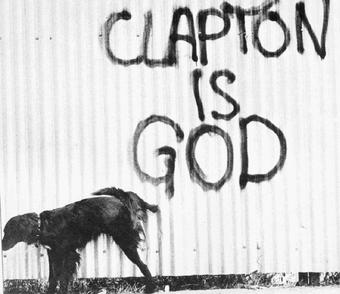
 This month, we welcome God himself into the humble pages of this blog. That is, God in the shape of Eric Clapton in his early career – specifically the legendary “Beano” album recorded with John Mayall's Bluesbreakers.


And you're going to have to forgive me for feelig just the tiniest bit smug, as I set myself the goal of transcribing all the solos off this one through September – and managed it! So that's this and “Live At The Regal” done – 2020 is proving to suck for pretty much everyone, but I will definitely be finishing this year a far better player than I started it as. I would absolutely recommend setting aside a portion of your practice time to work on transcription, almost regardless of ability level, as improving your ear is so crucial to developing every aspect of musicianship.


Anyway, enough digression – let's look at EC himself. As he's so deeply ingrained into the mainstream musical “establishment” now, it's hard to picture Clapton as a rock & roll outsider, but in the early 1960's that is exactly what he was. He began his guitar journey with something that we can all identify with - being given a cheap guitar by a kindly but uninformed relative, discovering that cheap = badly made & VERY difficult to play (at least it did before Yamaha brought out the Pacifica 112 in the 90s), and putting it down feeling like it's an impossibility. This false start – very similar to what I had myself at that age – would be remedied a couple of years later and Clapton began playing in earnest age 15, now motivated by a deep seated love of the blues music coming out of America. He would practice long hours, poring over licks and solos to get each one just so, often recording himself on a reel to reel tape recorder to check his progress.


In 1961 the now 16 year old Clapton enrolled in Kingston Art College but his focus remained on music and he took to busking around the area, starting to play more with other musicians and local bands before finding his first high profile gig with The Yardbirds in October of 1963. They were primarily focused on blues and rock & roll, but in March of 1965 had a breakthrough pop single with “For Your Love” which took them in a completely different directoion, and not one Clapton was happy with. He left, and joined John Mayall's Bluesbreakers in April of 1965 recording the famous “Beano” album with them. This is a semi-legendary album in guitar circles because at the time it really wasn't like anything that had been done before. Distortion, for example, was not something considered desirable by amp manufacturers so Clapton would push his Les Paul and Marshall to absolutely ear splitting volumes in order to get the thick, sustaining sound heard on tracks like “Steppin' Out” and his famous cover of “Hideaway”. His pentatonic pyrotechnics were also a world away from the sounds of someone like Hank Marvin or the Beatles which were most people's reference points for what a guitar should sound like, and what guitar playing was at that point.


Clapton would leave the band briefly in 1965 before rejoining, and then leaving again (admitting himself in later years to have been more than a little “flaky”) in July of 1966, ironically enough before the album itself had been released. He would go on to form Cream, another blues rock powerhouse and important link in the chain, but that's a story for another time – we're looking at EC's Bluesbreaker plaing this month.


I've lost count of the number of times I've written this now, but the basis of his style is the combination of minor and major pentatonics – as it has been with everyone we're looking at, we're looking much more at the “how” than the “what”. Let's start with the iconic opener to the album – the cover of the Otis Rush song “All Your Love”.


This opening “rip” up the fretboard was in itself a pretty bold statement, as it's immediately distinctive and not something most listeners would have heard before, especially performed with such volume and ferocity.


Clapton was also fond of repicking bent notes, something seen in his “Little Girl” solo where his rhythms double up what the basis is playing, crafting the solo into the fabric of the song rather than being a “here's twelve bars for you, go nuts” approach.


And I couldn't finish this without showing a couple of examples of his masterful blending of major and minor pentatonics:


We'll return to EC next year looking at his Cream – era playing, as he's such an influential player, but next month we're back across the Atlantic to check out Mike Bloomfield – till then, stay safe, stay sane, play they blues HARD!


Thursday, 10 September 2020

Why I Suck.... Progress Report #8 - Peter Green

 So, yes, I've gone out of sequence here, Peter Green wasn't supposed to be my object of study until October – but Nature has no respect for our plans and selfishly took this brilliant if troubled musician from us on July 25th, so swapping him to August and really delving into his style seemed an appropriate way of paying my respects to one of the truly great blues players.

Born Peter Allen Greenbaum on October 29th 1946 in London's Bethnal Green as the youngest of four children, it was Peter's brother Michael who first got him started, teaching him his first few chords. But by 11 he'd caught the bug seriously and begun teaching himself, heavily influenced (as many of his generation were) by The Shadow's Hank Marvin. By 15 he was playing professionally, playing bass and lead guitar in a variety of covers and rhythm and blues based bands. When John Mayall's Bluesbreakers exploded onto the scene with Eric Clapton after recording the now legendary “Beano” album in 1965, Green (having dropped the “baum” from his surname after being teased about it at school) was inspired to focus heavily on lead guitar and was a frequent attendee at their gigs during the “Clapton Is God” era of 1965-66.

It was Clapton's self-admitted unreliability and flakiness – leaving mid-tour to take a holiday in Greece – that would lead to Green's breakthrough. John Mayall recounts that during the Bluesbreaker's gigs with a variety of dep guitarists, Green would frequently be in the audience. “Peter had pestered John to employ him,” remembers Clapton, “often turning up at gigs and shouting from the audience that he was much better than whoever was playing that night. “

Soon enough, he would get his chance to prove it. After four concerts with the Bluesbreaker's as a dep, Green was hired as a full time band member and recorded “ A Hard Road” including self-penned instrumental “The Supernatural”, famous for it's eerie shimmer and sustain, as well as a blistering cover of Freddie King's “The Stumble” - which I spent most of August transcribing and will form the basis for this month's licks.

During his tenure with the Bluesbreaker's, Green met drummer Mick Fleetwood and bassist John McVie, and in 1967 they left the Bluesbreakers to form Fleetwood Mac with additional guitarists Jeremy Spencer and Danny Kirwan. Early Fleetwood Mac brought success with blues influenced tracks like “Oh Well”, “Green Manalishi”, “Man Of The World” and the instrumental “Albatross” which incredibly remains Fleetwood Mac's only number one single!

Unfortunately this period also brought Green into contact with LSD which he began taking in increasing quantities. This, combined with a diagnosis of schizophrenia, led to his quitting Fleetwood Mac and music in general for an extended period. The details of this are widely available, so I'm going to switch to a personal perspective here as his re-emergence in the mid 90s coincided with me getting serious about guitar playing, and my dad playing me the famous intro solo to the Fleetwood Mac with the encouragement to “learn that”! Which I duly did, with the aid of an early copy of Guitar Techniques magazine running a feature on him in early 1996 with transcriptions of both that and “Albatross”.

Fast forward a couple of years to 1999, and I was at Leeds University in my second year, and a regular at the open mic down the road from the university itself. I struck up a friendship with Jet Martin who ran it and was a solo blues artist, and one evening he mentioned to me that Peter Green (now with the Splinter Group, a blues project he formed in the 90s as part of his rehabilitation) was playing at the nearby Irish Centre, and as he shared management he was going to be the support – and would I like to be on the guest list?

Having never been on the guest list for anything, unsurprisingly my answer was yes, and not only did I get to see Peter Green himself from about 6 feet away, but also to meet him! However it was clear that his recovery at that point was far from 100%, he was very distant – not unpleasant, perfectly polite...just carrying on a completely separate conversation from the one I was trying to have with him- still, I have his autograph!

Right, enough history, let's get to analysing his playing style.

It will come as absolutely no surprise to both of you who've been following this blog that the major and minor pentatonics formed the basis of Green's style, and he had a beautiful knack of blending the two (for example, the cover of “Need Your Love So Bad”). His approach blended position 3 of A minor pentatonic with position 4 of A major:


And here's a typical Green style lick blending these two:


Now, Peter Green is rightly revered as a beautiful “feel” player with exquisite taste, touch and tone. But he could also put pedal to metal when he wanted to, and on his cover of Freddie King's “The Stumble” he does exactly that, pulling out this absolutely blistering triplet based E minor pentatonic run: https://youtu.be/NLpziHTO-Nc?t=70


Check out the ingenious way the phrasing seems to double back on itself, as well as the dash of b5 from the blues scale to top things off. Not to mention the sheer size of the thing – over four bars long! In terms of the mental agility required to pull off something like that it's akin to running the 100m sprint but on a tightrope strung across Niagra Falls – hugely impressive.


Have fun with these and see you next month for God himself, the John Mayall- era Eric Clapton!


Thursday, 20 August 2020

Why I Suck... #7 - Jimmie Vaughan!

 You all (y'all – we're talking about Texas blues here) know the legendary Stevie Ray Vaughan and his stupendoues command of blistering blues licks, shimmery intricate chord work and inimitable glassy Stratocaster tone. But – do you know who he credited as his biggest influence? His older brother, Jimmie.

Born in Dallas, Texas in 1951, Jimmie begain playing in his early teens and his first band played Dallas' Hob Knob lounge six nights a week, giving the young guitar okayer a through grounding in the rigours of live performance. In 1969 he got a big break, opening the show for Jimi Hendrix at Fort Worth – this show would see Jimmie lending Hendrix his Vox wah pedal, which Hednrix broke! However, in return, Hendrix gave him his own touring wah pedal. Not a bad trade.

Jimmie's next move would see him hitching across country to Austin, Texas and eventually finding success with The Fabulous Thunderbirds. After a troubled start – the bands' first four albums were a critical, but not commercial, success – ther career peaked with a top 40 single “Tuff Enuff” that featured in the 1986 film “Gung Ho”. A couple more commercial albums followed, but Jimmie left in 1990 to form a duo with his brother Stevie Ray – sadly this would be all too short lived as Stevie would be killed in a helicopter crash on August 27 of that year.

Since 1994 Jimmie has pursued a solo career, releasing his first album containing the song “Six Strings Down”, dedicated to Stevie's memory, and he continues to perform to this day.

Jimmie's style is, unsurprisingly, pentatonic based, and he is a spare, unflashy player with a gift for hitting just the right note at the right time. Indeed, Stevie Ray once attributed his own high octane style to being unable to successfully emulate Jimmie! There is nothing particularly technically difficult here, but instead try to listen and grasp the “storytelling” aspect of these licks:


This is based on the G minor pentatonic theme from the SRV/ JV collaboration "D/FW".


C minor pentatonic intro from "Boom Bapa Boom"


And opening bars of the solo.


Each of these follows a coherent “call / response” or “call / response / call / conclusion” pattern. This is something you can carry over to all aspects of soloing, regardless of genre.


Right, next month we're going off schedule and checking out the great and now very sadly late Peter Green – see you then!

Friday, 17 July 2020

Why I Suck.... Progress Report #6 - Buddy Guy!


You damn right it's Buddy Guy! One of the last of the “first gen” guitar heroes, and one of the few living links to the early Chicago blues days, Buddy – nee George - Guy was born in Lettsworth Louisiana on July 30 1936 to his sharecropper parents, Sam and Isabel. As a child he would pick cotton, earning $2.50 for every 100 pounds picked, but music and specifically guitar was in his blood from his earliest years, and he began playing on a two string diddley bow (an instrument built around glass bottle, scrap wood and strings) that he built himself. He was eventually given a Harmony acoustic guitar which set him on his way, picking out tunes and licks by ear from records.

In 1957 he moved to Chicago and earned a contract with Cobra Records, recording with Ike Turner amongst others, and after two releases he moved to the legendary Chess Records, home of blues legends Muddy Waters and Howlin' Wolf amongst others. He worked largely in the session player/ sideman capacity during this period, but also appearing on occasions with British blues and rock artists like Clapton and Led Zeppelin. In fact, it was only the blues revival of the late 80s and early 90s that saw his career really start to take off, with Eric Clapton requesting his presence on the “24 Nights” all start guitar show at the Royal Albert Hall. It was off the back of these performances that Guy signed with Silvertone Records and released his signature album “Damn Right I Got The Blues” in 1991. At the age of 55, he would become a true star of the blues – the moral here is never give up!

It's worth noting that just like Albert Collins, Buddy is a true showman, and has always been – playing a Stratocaster with an extra long cable behind his head and with his teeth, and being associated in his later years with his unmistakeable “polka dot” Strat which Fender turned into a signature model in 1995.

As of 2019, he still plays approximately 130 dates a year – although sadly COVID 19 will have curtailed that this year – and maintains Buddy Guy's Legends blues club in Chicago (which I had the pleasure of visiting in 2010) which hosts many up and coming blues artists.

So, enough of the man – onto the playing! Buddy's playing is probably best described as controlled chaos, a simmering wellspring of energy barely kept in check by a player bursting with ideas. As with all the players we've been looking at over this year, the minor pentatonic forms the basis of his style – but as with all of the players we've been looking at, it's not the what but the how. For one thing, his command of dynamics is masterful, being able to go from a whisper to a shout in the space of a single bar, and skilfully juxtaposing the tone of his licks against his vocals. In this respect, he rivals even B.B. King.

His mastery of string bend is unsurpassed, with an ability to bend perfectly in tune or slightly flat or sharp as the song requires. His track “Black Night” has a trick I've never heard anywhere else, where he bends up and brings the note down while applying an almost violent vibrato, creating an unearthly, ghost like sound.

Like many players, Buddy is fond of the “BB King” pentatonic box – this utilises the highest four notes from shape 2 of the minor pentatonic, in A minor giving us the G, A , C and D notes on the 8th and 10th frets of the B and E strings. This allows him to reach the E (5th) by means of a bend – also to tease the b5 from the blues scale by means of a semitone bend – and resolve to the A root with the third finger for a powerful and stinging vibrato.


He is equally at home with the major pentatonic, however, as his cover of “Sweet Little Angel” proves, including this beautiful BB King- esque intro lick:


Double stop licks like this one also form an important part of his style, as he tends to play with clean-ish sound and with a single coil Stratocaster (usually in his signature polka dot finish) – double stops help fill a lot of sonic space, I like to think of them as Nature's distortion pedal. Here's an example of his use of this technique:


Finally, a typical Guy-style fast and complex run. He manages to have the knack of cramming just the right number of notes into a particular musical space, even when you think he's going to trip up and oversaturate the beat he still manages to pull it back!


Until next month, enjoy and go check out this living link to the origins of Chicago blues – Buddy Guy was thre at the beginning, he's there now, and he's finally getting the recognition he always deserved. Next month, we're visiting Austin, Texas for a look at the lesser known Vaughan brother – Jimmie Vaughan.